Stand mixers aren’t just for cakes anymore. They’ve become serious tools for home bakers. But if you really want to test one, make bread.
Cookie dough is easy. Bread dough isn’t. Sticky sourdough and dense whole-wheat push mixers hard, so modern machines focus less on raw wattage and more on smart design: steady torque, good cooling, and solid build.
With efficient motors, durable gears, and sensors to prevent strain, today’s mixers can keep up as dough thickens. And whether you’re baking at home or for a side hustle, the right mixer can turn a tough dough into something smooth and satisfying.
The Best Stand Mixers for Every Type of Baker
The current market for stand mixers has shifted toward high-efficiency DC motors and specialized mixing actions. Today’s bakers are looking for machines that stay anchored to the counter during heavy kneading and offer precise control over dough temperature. Below is our expert selection of the best tools for the job.
1. KitchenAid Classic Series (K45SS)
Best for Multi-Tasking & Beginners
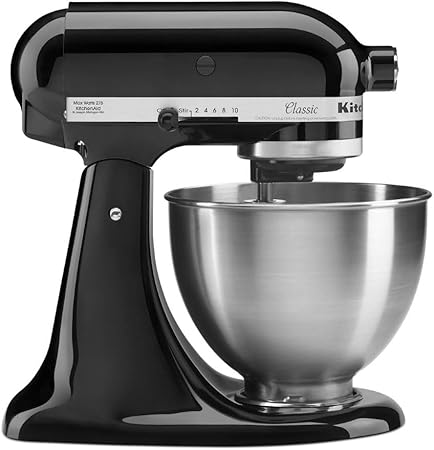
The KitchenAid Classic remains a staple due to its massive ecosystem. While not as specialized for massive batches as the Bosch, its planetary mixing action and tilt-head design make it the most versatile tool for a home cook who wants to make pasta, grind meat, or whip meringues alongside their bread.
Type: Tilt-head stand mixer | Key Specs: 275W AC motor, 4.5-quart bowl, 10 speeds, all-metal construction | Attachments: Dough hook, flat beater, wire whip.
Pros:
- Classic design with legendary longevity and repairability.
- The “Power Hub” supports over 15 optional attachments.
- Intuitive and easy to use for beginners.
Cons:
- Can struggle with very stiff, low-hydration doughs.
- AC motor is louder and less energy-efficient than modern DC motors.
Best Use Case: Occasional bread makers who want a versatile, multi-purpose appliance.
Verdict: The reliable “old faithful.” Perfect for those who value versatility and style.
2. Bosch Universal Plus Stand Mixer
Best Overall for Bread Enthusiasts

The Bosch Universal Plus is widely considered the gold standard for serious bread makers. Unlike traditional tilt-head models, it features a bottom-drive motor that provides incredible stability.
Its belt-driven system is legendary for handling up to 15 pounds of dough without walking across the countertop, making it a favorite among high-volume bakers.
Type: Bottom-drive bowl-mounted mixer | Key Specs: 500W (High-Torque DC), 6.5-quart capacity, 4 speeds + Pulse, lightweight BPA-free plastic bowl | Attachments: Wire whips, dough hook, NutriMill hook extender
Pros:
- Unrivaled stability; won’t bounce or overheat under heavy loads.
- Massive capacity. Handles four large loaves of bread at once.
- Hook extender ensures even small batches are kneaded perfectly.
Cons:
- Utilitarian aesthetic compared to metal-bodied competitors.
- Center-column design changes how you add ingredients compared to open-top bowls.
Best Use Case: High-volume bread baking and heavy whole-grain doughs.
Verdict: If performance and reliability matter more than retro styling, this is the most capable bread tool for the home.
3. Ooni Halo Pro Spiral Mixer
Best for Pizza & Sourdough Purists

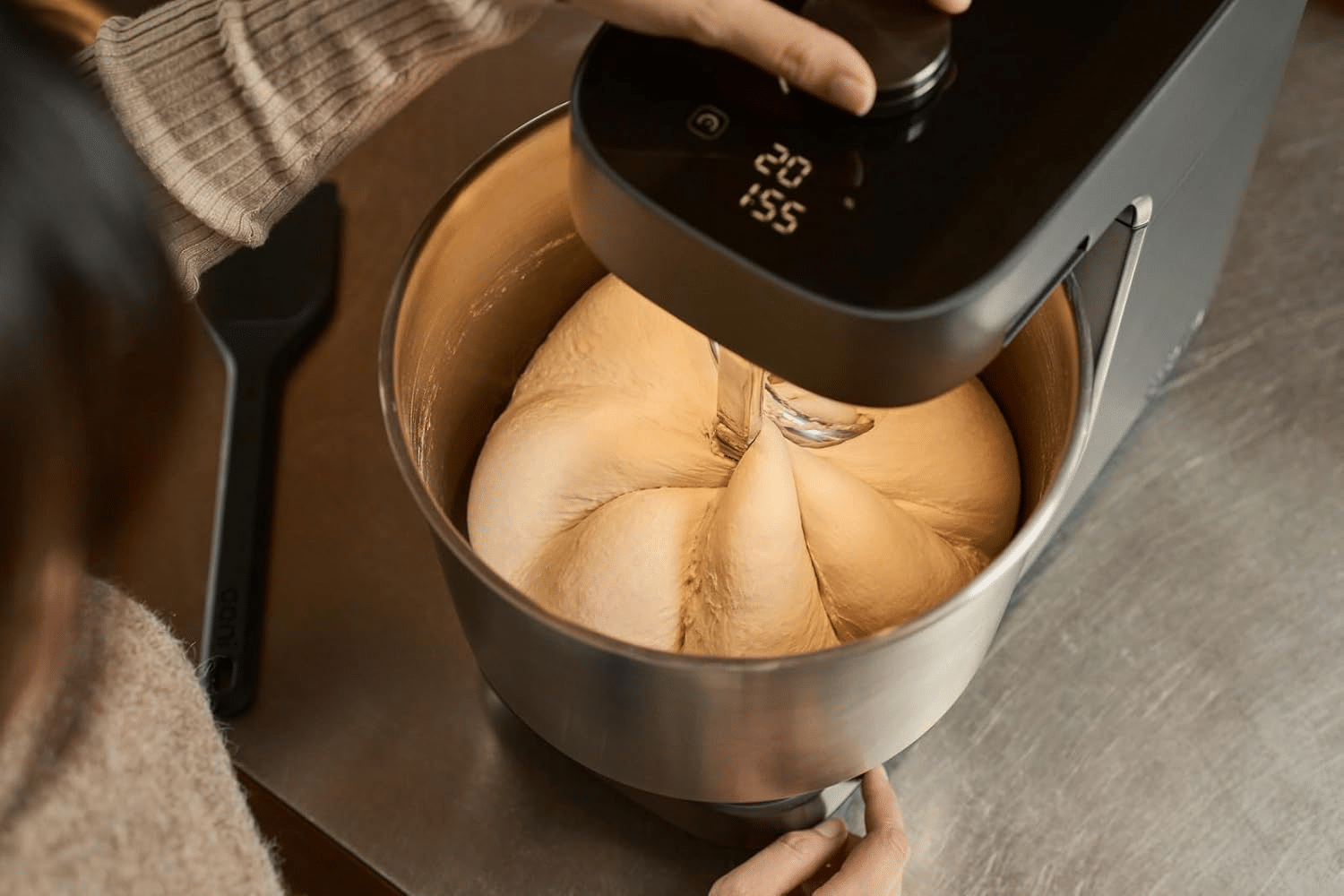
Ooni has revolutionized the home mixer market by bringing spiral mixing technology, previously exclusive to professional bakeries, into the domestic kitchen. In this system, the bowl rotates while the spiral hook remains in place, significantly reducing friction and heat transfer to the dough.
Type: Spiral Mixer (Stationary head, rotating bowl) | Key Specs: 7.3-quart capacity, 58 speed settings, digital timer, integrated LED bowl lighting | Weight: ~32 lbs (Heavy-duty stability).
Pros:
- Professional-grade gluten development with minimal oxidation.
- Ultra-precise speed control (60 to 1,000+ RPM) for sensitive starters.
- Extremely quiet operation and includes a removable breaker bar.
Cons:
- Heavy and bulky; best for a dedicated countertop spot.
- Primarily focused on dough; less versatile for light baking.
Best Use Case: Pizza dough, artisan sourdough, and high-hydration breads.
Verdict: The ultimate pick for purists who want bakery-quality results at home.
4. ZACME 8.4QT Commercial Stand Mixer
Best Heavy-Duty Powerhouse

For those running cottage industries or large households, the ZACME is a powerhouse. Meeting NSF/ANSI 8-2023 standards, it brings commercial durability to a consumer price point. Its 800W DC motor is designed for long-duration reliability, featuring all-metal gears that won’t strip under pressure.
- Type: Bowl-lift professional mixer
- Key Specs: 800W DC motor, 8.4-quart stainless bowl, 11 speed settings, aluminum die-cast body.
- Weight: 33 lbs.
Pros:
- Massive 3kg+ dough capacity.
- Digital display with a countdown timer allows for multitasking.
- Quiet-Drive tech keeps noise levels as low as 48dB.
Cons:
- Large footprint requires significant counter space.
- The 8.4QT bowl may be overkill for single-loaf recipes.
Best Use Case: Micro-bakeries, large families, and dense rye or bagel doughs.
Verdict: A professional-grade tank that offers the best power-to-volume ratio for heavy users.
5. Cuisinart SM-50R (5.5 Quart)
Best Budget Stand Mixer for Dough

Cuisinart’s SM-50R is the leading alternative for budget-conscious bakers. It offers a larger bowl and a more powerful motor than many entry-level competitors, making it a solid entry point for those venturing into yeast-based baking without a massive investment.
- Type: Tilt-head stand mixer
- Key Specs: 500W motor, 5.5-quart stainless steel bowl, 12 speeds, die-cast metal construction.
- Extras: Splash guard with pour spout included.
Pros:
- Excellent price-to-performance ratio.
- Large 5.5-quart bowl handles standard family recipes easily.
- 12 speeds allow for precise adjustment for different textures.
Cons:
- Internal gears may not withstand daily heavy-duty bread kneading over years.
- Can vibrate at higher speeds with heavy loads.
Best Use Case: Home bakers on a budget who need a solid, all-around performer for standard loaves.
Verdict: The best entry-level mixer that doesn’t compromise on essential bowl capacity.
Comparison Table
| Model | Motor Type | Capacity | Best For | Build Quality |
| Bosch Universal | 500W (DC) | 6.5 Qt | Large Batches / Grains | High (Utility) |
| Ooni Halo Pro | 750W (DC) | 7.3 Qt | Pizza & Sourdough | Premium |
| ZACME 8.4QT | 800W (DC) | 8.4 Qt | Heavy-Duty / Micro-Bakery | Commercial |
| KitchenAid Classic | 275W (AC) | 4.5 Qt | Versatility / Multi-task | Solid (Traditional) |
| Cuisinart SM-50R | 500W (AC) | 5.5 Qt | Budget / Starters | Standard |
How to Choose the Best Stand Mixer for Bread Dough
- Motor Power & Torque
Don’t be fooled by high wattage alone. For bread, Torque is what matters. DC motors are superior because they provide maximum power at low speeds (ideal for kneading) and run much cooler than AC motors.
- Planetary vs. Spiral Action
- Planetary: The hook moves around the bowl (like KitchenAid). Great for general baking.
- Spiral: The bowl rotates while the hook stays stationary (like Ooni). This is the gold standard for dough because it develops gluten faster without heating the dough.
- Build Quality & Stability
Heavy dough puts immense pressure on a mixer’s frame. Look for all-metal gears and a heavy chassis (30+ lbs) or suction-cup feet. If a mixer is too light, it will “walk” across your counter during the kneading process.
- Ease of Cleaning
Dough can be messy. Models with removable breaker bars or dishwasher-safe stainless steel attachments save significant time during cleanup.
❓FAQ
Is a stand mixer necessary for bread dough?
While you can knead by hand, a mixer is essential for high-hydration doughs (like focaccia) or enriched doughs (like brioche) that are too sticky to handle easily.
Which is better: tilt-head or bowl-lift?
For bread, bowl-lift is generally preferred. The fixed head is more structurally rigid, meaning it won’t strain at the hinge when the dough becomes elastic and tough.
Can a stand mixer handle sourdough?
Yes, but sourdough often requires long kneading or folding sessions. High-torque mixers like the Bosch or Ooni are better suited for the long run-times of artisanal sourdough.
How long should you knead dough in a mixer?
Most recipes require 5 to 8 minutes on low speed (Speed 1 or 2). Never knead on high speed, as it can strip the gears or over-oxidize the dough.
Are expensive mixers worth it?
If you bake bread more than once a week, yes. Cheaper mixers often use plastic gears that will eventually fail under the repetitive stress of heavy dough.
Final Verdict: Which One Should You Buy?
If you are a bread-first baker, the Bosch Universal Plus remains the most logical choice for its power and capacity.
For those obsessed with the science of pizza and sourdough, the Ooni Halo Pro offers unmatched professional technology.
If you need a versatile kitchen companion for all types of cooking, the KitchenAid Classic is the enduring favorite.
What kind of bread are you planning to bake first with your new mixer?