You’re cruising down a quiet backroad. The playlist is perfect. The views are gorgeous.
Then it appears: a low-clearance bridge that absolutely does not look like it’s going to clear your rig. Your stomach drops. There’s nowhere to turn around. Your phone didn’t warn you. Now you’re stuck.
This exact moment is why relying on standard phone apps is a gamble. Google Maps doesn’t know you’re 13 feet tall and hauling propane. Apple Maps doesn’t care that you’re towing 15,000 pounds. A proper RV GPS does. It routes you around low bridges, steep grades, narrow parkways, and hazardous tunnels so you can drive without fear.
I dug through specs, tested features, and read thousands of real RV owner reviews. Whether you want a giant screen for tired eyes or a simple budget-friendly backup, here are the units that actually keep you safe.
Contents
Your Phone Isn’t Enough. Here’s Why!
Smartphones are great for quick errands, not RV navigation. A dedicated unit is purpose-built for large vehicles, and the difference is huge.
The Low Bridge Problem
Standard apps assume you’re driving a Camry. They will happily route your 12’6” Class A under a 10-foot bridge. RV GPS units let you enter your vehicle’s exact height, weight, length, and propane status. That data is used to avoid dangerous routes automatically.
Propane Restrictions
Certain tunnels and parkways ban propane. Your phone has no idea what’s in your tanks. RV GPS units do.
No Cell Service? No Problem.
Apps rely on data. RV GPS uses satellites and pre-loaded maps, meaning you stay covered even when you’re boondocking far past the last bar of signal.
Expert Picks: The Top 6 RV GPS Units
1. Garmin RV 1095
Best for Big Rigs & Class A Motorhomes

If you want the biggest, clearest view possible, this is the king. It features a massive 10-inch edge-to-edge touchscreen that can be mounted in portrait or landscape mode.
What Users Like:
The screen size is the biggest selling point. It is incredibly easy to read without squinting, even from the driver’s seat of a wide Class A. The magnetic-powered mount is secure yet allows you to pop the unit off easily for route planning on the couch.
What Users Dislike:
It is physically huge. In a smaller Class C or truck, it might block too much of your windshield view. The battery life is short (less than 2 hours), so it needs to stay plugged in.
Why It Wins:
It offers the most comprehensive RV navigation system experience with preloaded directories for KOA, Ultimate Public Campgrounds, and PlanRV.
2. Garmin RV 895
Best Overall Balance

The RV 895 is widely considered the sweet spot in Garmin’s lineup. It offers an 8-inch screen that is large enough to see clearly but not so big that it dominates your view.
What Users Like:
It shares the same crisp, high-resolution display and fast processor as the 1090. Users love the custom routing that accounts for their rig’s weight and propane tanks. The voice assistant is responsive, allowing you to ask for “gas stations” or “rest stops” without touching the screen.
What Users Dislike:
Like its big brother, it relies on a smartphone connection (via the Garmin Drive app) for live traffic and weather updates, which some users find annoying to set up initially.
Why It Wins:
It balances price and performance perfectly, making it the best GPS for RV owners who want premium features without the massive footprint of the 10-inch model.
3. Garmin RV 795
Best Mid-Range Standard

For years, the 7-inch GPS was the industry standard. The Garmin RV 795 updates this classic form factor with modern software and faster processing speeds.
What Users Like:
It is compact and fits easily in smaller tow vehicles or Class B vans. It includes “BirdsEye Satellite Imagery,” which lets you see a realistic overhead view of your destination, perfect for checking if a campground entrance is tight.
What Users Dislike:
The screen resolution isn’t as high as the 895 or 1095. Some users with older eyes find the text a bit small compared to the larger models.
Why It Wins:
It packs all the essential camper GPS safety features—custom routing, steep grade warnings, and road warnings—into a package that is affordable and unobtrusive.
4. Garmin RVcam 795
Best Multitasker (GPS + Dash Cam)

This unit takes the solid foundation of the RV 795 and adds a built-in dash cam to the back of the device. It records the road ahead while you navigate.
What Users Like:
It reduces dashboard clutter by combining two devices into one. In the event of an incident, it automatically saves the video footage. It also offers advanced driver alerts, like lane departure warnings and forward collision warnings, which add a layer of safety.
What Users Dislike:
You have to mount it carefully to ensure the camera has a clear view of the road, which limits where you can place it on your dash.
Why It Wins:
For safety-conscious travelers, having a dash cam is non-negotiable. This unit integrates it seamlessly into a reliable RV navigation system.
5. TomTom GO Camper Max
Best Value Alternative

While Garmin dominates the market, TomTom offers a compelling alternative with the GO Camper Max. It features a bright 7-inch screen and a distinct interface that some drivers prefer.
What Users Like:
The “Scenic Routing” feature is a hit, allowing you to choose a more beautiful drive rather than just the fastest one. It includes worldwide maps, which is great if you plan to rent an RV overseas. Users also appreciate the dedicated “Camper” points of interest that filter out car-only spots.
What Users Dislike:
The traffic updates require a Bluetooth tether to your phone’s data plan. Some users find the menu system less intuitive than Garmin’s interface.
Why It Wins:
It is often priced lower than the equivalent Garmin, offering excellent value for a dedicated camper GPS that still handles weight and dimension restrictions accurately.
6. OHREX 7-Inch Truck/RV GPS
Best Budget Pick

If you cannot justify spending hundreds of dollars, the OHREX unit is a functional budget choice. It runs on Windows CE and offers basic custom routing for large vehicles.
What Users Like:
The price is unbeatable. It does the basic job of routing you away from low bridges based on the dimensions you enter. It comes with lifetime map updates, which is a nice bonus for a budget device.
What Users Dislike:
The touchscreen is resistive (requires a press) rather than capacitive (like a phone), making it feel dated. The interface is clunky, and the screen is hard to read in bright sunlight.
Why It Wins:
You don’t need to spend a fortune to get RV safe routes. It’s a great backup device or a starter unit for weekend warriors.
Buying Guide: What Actually Matters?
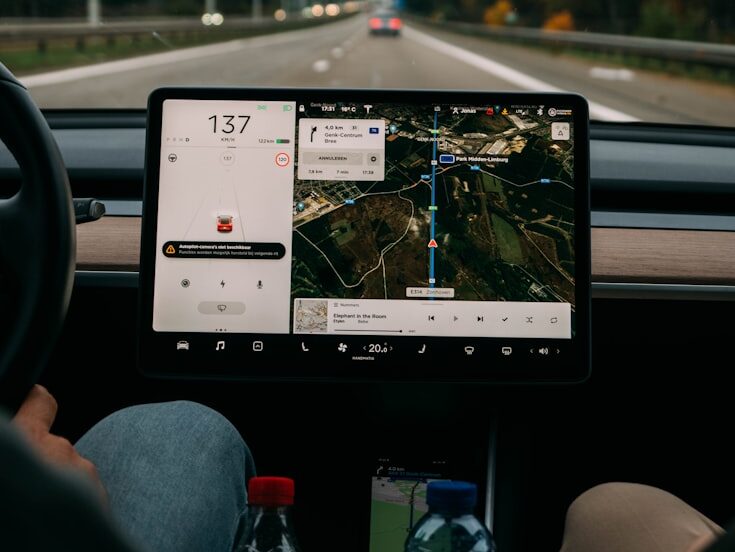
When shopping for the best GPS for RV use, keep these specific features in mind to ensure you get your money’s worth.
Custom Routing Profiles
Non-negotiable. Make sure it supports:
- Height: To avoid low bridges.
- Weight: To avoid weak bridges.
- Length: To avoid tight switchbacks.
- Propane Tags: To avoid restricted tunnels. Never buy a “car” GPS for an RV; it simply won’t have these safety filters.
Live Traffic & Weather
You are driving a heavy vehicle that takes a long time to stop. Knowing about traffic jams or storms ahead of time is vital. Most modern RV navigation system units pair with your smartphone to pull real-time data. Look for models that offer “Live Traffic” to help you avoid gridlock.
Wi-Fi Updates
In the old days, you had to plug your GPS into a computer to update maps. Today’s best models update over Wi-Fi. This is a huge convenience feature. You can update your maps while parked in your driveway or at a campground with a good signal, ensuring you always have the latest road data.
Campground Database Support
A good camper GPS should come preloaded with databases like TripAdvisor, KOA, or Ultimate Public Campgrounds. This lets you search for “campgrounds near me” and filter by amenities like “pet friendly” or “50-amp hookups” without needing to open a separate app on your phone.
What RV Owners Keep Complaining About
After digging through forums, three issues pop up everywhere:
- Voice commands on older models were terrible. Newer units are much better.
- Gravel road “shortcuts” happen when avoidances aren’t set correctly.
- Screen glare is common in big RV windshields. A matte protector or angle-adjustable mount helps a ton.
Final Words
Your RV is too big and too expensive to trust to a phone app that doesn’t know your height or your propane tanks. A real RV GPS is peace of mind in a box.
For the best overall experience, go with the Garmin RV 1095 or RV 895.
For dash cam integration, pick the Garmin RVcam 795.
For value, the TomTom GO Camper Max punches above its price.
Don’t wait for a low-clearance bridge to teach you this lesson the hard way.
Ready to travel stress-free? Measure your rig, pick your screen size, and grab your GPS before your next trip.