You finally land the perfect campsite. The view looks like a postcard. No neighbors. No noise. Just pure stillness. Then your tank monitor blinks red. Black tank full. Suddenly, your peaceful getaway turns into a stressful scramble to find the nearest dump station.
Thousands of RVers hit this exact wall before discovering the game-changer: compostable toilets built specifically for boondocking.
Switching away from a black tank is one of the most freeing upgrades you can make. You stay off-grid longer, skip sewer hookups, and (believe it or not) deal with far less odor than a standard RV flush setup.
But should you get a unit with an electric agitator? Do you really need a urine diverter? Will your bathroom actually smell clean?
I dug through specs and real user experiences to separate the hype from the solutions that really work. Whether you’re outfitting a van build or upgrading a full-size motorhome, this guide highlights the best compostable toilets that genuinely make off-grid life easier, so you can get back to enjoying the places where the Wi-Fi disappears, and the stars show up in full.
What Real Users Are Discussing
Switching to a waterless toilet isn’t difficult, but it is a lifestyle shift. And the forums are full of honest, sometimes hilarious debates about what works and what definitely doesn’t.
The “Churn” vs. “Bag” Debate
High-end composting toilets use an agitator (either a crank or a small motor)to mix solids with coco coir or peat. Users love this because it speeds up the breakdown process and keeps odors in check. But simpler “bag-style” setups are becoming more popular with off-grid campers. They’re cheaper, lighter, and have no moving parts to jam or fail in the middle of nowhere.
The Urine Struggle
Almost every smell complaint comes back to one thing: mixing liquids and solids. A proper urine diverter is absolutely essential. When pee sneaks into the solids bin, it becomes a swampy, sour mess. The best compostable toilets for boondocking separate everything automatically, which keeps the bathroom surprisingly odor-free.
Power Requirements
Do you have enough solar to run fans or an electric agitator? Many modern composting units use 12V power to keep airflow moving. The draw is minimal, but campers with small battery banks often lean toward manual crank models. They want to save every watt on cloudy days when the panels aren’t pulling their weight.
Expert Picks: The Top 5 Compostable Toilets
We selected these products based on reliability, ease of disposal, and suitability for mobile lifestyles.
1. Nature’s Head Self-Contained Composting Toilet
Best Overall Reliability

If you ask long-time nomads about compostable toilets for boondocking, this is the name you will hear most often. Nature’s Head has set the standard for durability in rugged environments for years.
What Users Like: It is built like a tank. The “spider handle” agitator is easy to turn, even in tight spaces. Users consistently report zero odors when using the included 12V fan. The urine bottle is large (2.2 gallons), meaning fewer trips to empty it.
What Users Dislike: It looks a bit industrial. The aesthetic is more “marine gear” than “modern home.” Emptying the solids bin can be awkward because you have to unlatch the entire top half of the unit to access it.
Verdict: The undisputed king of durability for off-grid living.
2. OGO Origin Compost Toilet
Best Modern Design

The OGO is the sleek, modern answer to older, bulkier designs. It features an electric agitator, meaning no hand crank is required, and it has one of the smallest footprints on the market.
What Users Like: The electric button for mixing compost is a game-changer for those who hate cranking. It includes a sensor that lights up when the urine bottle is full, a feature users absolutely love. Its square shape fits into a tight RV bathroom corner much better than rounded models.
What Users Dislike: It relies on power. If your batteries die, you can’t mix your compost easily. The urine bottle is slightly smaller than the Nature’s Head, requiring more frequent emptying.
Verdict: The best choice for tech-savvy campers who want a premium, appliance-like feel.
3. Separett Tiny Composting Toilet
Best “House-Like” Experience

Separett designed the Tiny specifically for tiny homes and vans. Its main selling point is the “privacy screen” that hides the waste from view, making it feel just like a residential toilet.
What Users Like: You never have to look at your waste. The privacy flaps open automatically when you sit down. It uses a waterless toilet design that diverts urine efficiently. Users appreciate that it uses a solid waste container that is easy to lift out without disassembling the whole unit.
What Users Dislike: It is pricey. Also, unlike the churning models, this is a “bucket and bag” system. It doesn’t actively compost inside the unit; it just collects waste for you to compost elsewhere or dispose of.
Verdict: Perfect for those who are squeamish and want a familiar, visual-barrier experience.
4. Sun-Mar GTG Urine Diverting Toilet
Best Compact Option

The GTG (Goes To Go) is Sun-Mar’s ultra-compact solution. It is significantly smaller than the competition, making it ideal for camper vans or teardrop trailers where every inch counts.
What Users Like: The installation is incredibly simple. It separates liquids and solids effectively without needing complex venting in every scenario (though venting is recommended). It is an affordable entry point into compostable toilets for boondocking.
What Users Dislike: The urine diverter slope is a bit shallow, which can lead to splashing if you aren’t careful. The solids bin is small, so it works best for solo travelers or weekend warriors rather than full-time families.
Verdict: A solid, space-saving choice for smaller rigs.
5. Laveo Dry Flush Toilet
Best “Zero Ick” Alternative
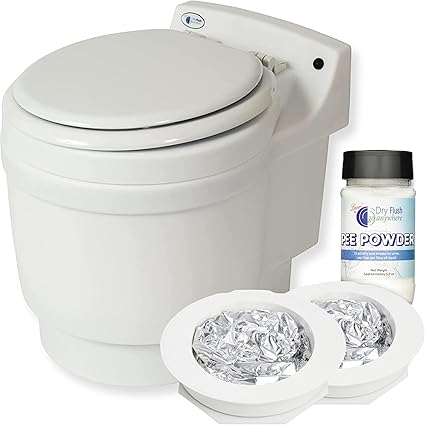
Note: While not a composter, this is frequently recommended by boondockers who want a waterless solution without handling “dirt.”
The Laveo uses a unique cartridge system to wrap waste in an airtight barrier after every “flush.” Think of it like a Diaper Genie for adults.
What Users Like: There is absolutely no smell and no “waste” to see. You simply push a button, and the mess disappears into a sealed bag. It is the cleanest waterless toilet experience possible.
What Users Dislike: The cartridges are expensive. You are paying for every flush, which adds up quickly during long-term off-grid living. It also generates more plastic waste than a true compost system.
Verdict: Ideal for weekenders who want convenience over sustainability.
Buying Guide: Key Features to Watch For
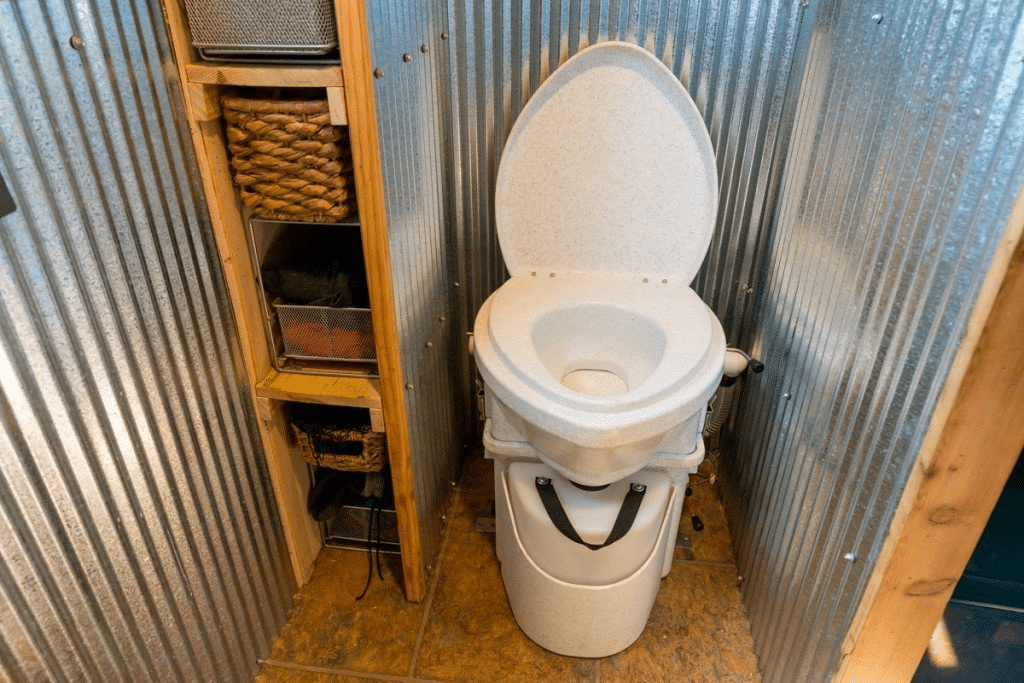
Choosing the right throne for your RV bathroom isn’t just about budget. These systems all work differently, and a little prep now saves you a lot of frustration later. Here’s what to look for before you click “Buy.”
Agitator vs. Bagging System
True compostable toilets for boondocking use an internal agitator to mix your solids with coco coir or peat. This keeps everything dry, minimizes smell, and helps the composting process actually happen.
Bagging systems (like Separett-style setups) don’t compost; they simply store waste in liners. They’re simpler, but you’ll empty them more often. If you want long intervals between dumps, lean toward an agitator model like Nature’s Head or OGO.
Urine Diverter Efficiency
This is the deal-breaker feature. A good diverter keeps liquids and solids completely separate. Look for a deep, well-shaped funnel that guides urine forward. If the diverter is shallow or poorly angled, you’ll end up with cross-contamination… and that’s where the swampy smell comes from. Even the best composting toilet can’t save you from a bad diverter.
Venting Requirements
Most quality units use a 12V fan to create gentle negative pressure. This pulls air out of the toilet and vents it outside, meaning zero odors inside your rig. Check what’s included. Some brands ship the hose, fan, and mounting hardware. Others expect you to buy extra parts and cut your own vent hole. Make sure you know what the installation will look like on day one.
Final Thoughts
Switching to a dry toilet system is one of the smartest moves you can make for true off-grid freedom. You stop timing your stays around dump stations and start choosing campsites based on sunrise views, quiet trailheads, and how long you actually want to stay put.
If you want the most battle-tested option for full-time life on the road, the Nature’s Head is still the champ. For campers who love modern conveniences and a smaller footprint, the OGO Origin is a sleek and thoughtful upgrade. And if you prefer a toilet that feels the most “house-like” without any mixing or cranking, the Separett Tiny delivers a surprisingly refined experience.
Don’t let black tank stress dictate your adventure. Pick the compostable toilet that fits your style, hydrate a brick of coco coir, and enjoy the kind of boondocking freedom that keeps you in the wild longer—comfortably, cleanly, and confidently!