Dragging a hose around your pool, wrestling with cords, and still missing spots is no longer necessary. Modern robotic pool cleaners have come a long way from the old suction-head designs.
Today’s best models use smart mapping to clean efficiently, sensors to handle walls and steps, and can even park themselves when they’re done.
High-end cordless robots now match corded ones in power and coverage, without the hassle of tangled cables.
For most home pools, cordless is the best place to start. Corded models still make sense for large or commercial pools that need daily, hands-off cleaning.
Best Robot Pool Cleaners for In-Ground Pools, Above-Ground Pools, and Everything in Between
The eight cleaners below cover the full range, from a flagship cordless robot with sonar mapping and dual waterline scrubbing to a budget-friendly corded model that simply gets the floor clean without any setup complexity.
Each was chosen based on actual cleaning coverage, filtration quality, and how well it fits a specific pool type and maintenance routine.
1. Dolphin Nautilus CC
The best for above-ground and mid-sized pools
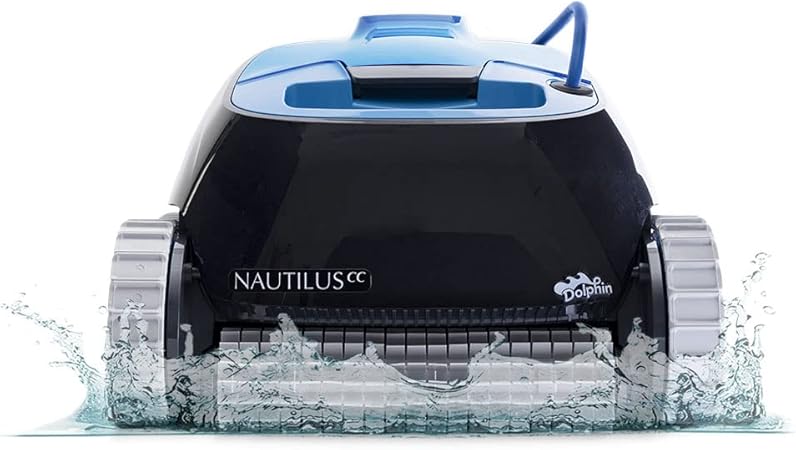
The Nautilus CC has been a consistent bestseller for years, and the reason is straightforward: it works reliably, it’s simple to operate, and the filter is easy to clean. One button starts a two-hour cycle covering the floor and lower walls.
There’s no app to configure, no mapping to wait for, and no settings to adjust between uses. For pools up to 33 feet, it handles the job.
The top-load filter design is a small but meaningful detail. Removing and rinsing the filter after a cycle takes about 90 seconds without reaching into the body of the robot or dealing with a bottom-access cartridge.
Long-term durability is a genuine Dolphin strength; the Nautilus CC is built to run multiple cycles per week for years without mechanical issues.
Type: Corded robotic | Key specs: 2-hour cleaning cycle, top-load filter, active scrubbing brush
Pros:
- Single-button operation with no app, no mapping setup, and no configuration between cycles
- The top-load filter removes and rinses in under two minutes. The easiest maintenance routine on this list
- Build quality is designed for multi-year daily use without reliability problems
Cons:
- No smart mapping. Navigation is systematic rather than AI-planned, which can leave some coverage gaps on irregular pool shapes
- Does not clean the waterline. The scum line requires manual attention or a separate treatment
Verdict: The most reliable, low-maintenance pool cleaner on this list. For above-ground pools and straightforward in-ground pools up to 33 feet, it’s the easiest buying decision here.
2. Beatbot AquaSense 2
The best overall flagship cleaner

The AquaSense 2 is the most technically advanced residential pool cleaner available in 2026.
Subaqueous Sonar Mapping reads the pool’s layout before starting and plots the most efficient cleaning path rather than moving randomly and hoping for full coverage.
The practical result is fewer missed patches and shorter cleaning cycles than with robots that navigate solely by collision detection.
The dual waterline scrubbing feature separates this from most competitors. The scum line, the ring of sunscreen, body oils, and debris that forms at the water’s surface, is the hardest part of the pool to keep clean, and most robots ignore it entirely.
The AquaSense 2 handles it with a precision scrubbing pass that normally requires manual detailing.
Smart surface parking brings the robot back to the top when the cycle finishes, so it’s ready to retrieve without diving for it.
Type: Cordless robotic | Key specs: 5-hour runtime, ultrasonic sensors, floor/wall/waterline cleaning modes, smart app return
Pros:
- Sonar mapping produces genuinely efficient path planning. Full pool coverage in less time than random-navigation competitors
- Dual waterline scrubbing removes the scum line buildup that floor-only robots leave behind
- Smart surface parking returns the robot to the waterline automatically when the cycle ends
Cons:
- Price is at the top of the residential pool cleaner market
- Requires a full recharge between cycles. For daily cleaning on large pools, a second unit or a corded alternative may be more practical
Verdict: The most capable pool robot you can buy for a residential pool. If the budget is there, nothing else on this list matches it on coverage, waterline performance, and navigation intelligence.
3. Aiper Scuba X1 Pro Max
The best for large pools and heavy debris

The X1 Pro Max is built around one specification: 8,500 GPH suction. That’s the figure that matters for large in-ground pools surrounded by trees, pools in dusty or sandy climates, and any situation where the debris load is heavy enough that a standard cleaner needs multiple passes to keep up.
The ultra-fine pleated filtration captures fine sand and algae that passes straight through standard mesh filters back into the water.
AI path planning handles navigation across large pool surfaces without the coverage gaps that simpler systems leave on irregular shapes.
The larger footprint and longer charge time are real tradeoffs. This machine is optimized for thorough cleaning of large surfaces, not quick cycles on smaller pools.
Type: Cordless robotic | Key specs: 4-hour runtime, 8,500 GPH suction, ultra-fine filtration, AI path planning
Pros:
- 8,500 GPH suction handles heavy leaf loads and large debris that clog lower-capacity robots mid-cycle
- Ultra-fine pleated filters capture fine sand, silt, and algae rather than circulating them back into the pool water
- AI navigation handles large and irregular pool shapes without leaving uncleaned patches
Cons:
- Larger physical footprint than mid-range models. Less maneuverable in tight corners and on steps
- Charge time is longer than that of smaller cordless competitors. Plan cleaning sessions around the charging cycle
Verdict: The right cleaner for large in-ground pools with serious debris loads. If your pool is under 40 feet and debris is light, the X1 Pro Max is more machine than you need.
4. Polaris VRXIQ+
The best smart and app-controlled cleaner

The case for a corded robot today is runtime. Specifically, the ability to run daily cleaning cycles without managing a charging schedule.
The VRXIQ+ stays plugged in, which means it can run every morning on a timer without any user involvement between sessions.
The 70-foot tangle-reducing swivel cable handles most residential pool sizes without the cord management frustration that made older corded robots unpopular.
The iAquaLink app integration is the most capable remote control system in the consumer pool cleaner category.
Seven cleaning modes handle everything from a quick 45-minute floor pass to a full 3.5-hour deep clean, and the remote steering feature lets you drive the robot directly to a specific patch of dirt from your phone; useful for the spot you notice from the deck that the robot’s scheduled route missed.
Type: Corded robotic | Key specs: 70ft tangle-reducing swivel cable, 7 cleaning modes, large debris canister, iAquaLink app
Pros:
- Unlimited runtime means daily automated cleaning without battery management or charging schedules
- iAquaLink remote steering lets you direct the robot to specific spots from a smartphone in real time
- Large debris canister handles heavy leaf falls without mid-cycle emptying
Cons:
- A cord is still a cord. The swivel reduces tangling but doesn’t eliminate retrieval and storage management
Verdict: The best option for pool owners who want fully automated daily cleaning without ever thinking about battery levels. The remote steering feature is the most practically useful smart pool cleaner feature available.
5. WYBOT C1
The best 4-in-1 versatility

Steps are the area of the pool that most robots quietly give up on.
The geometry — shallow risers, tight corners, changing angles — defeats navigation systems designed for flat floors and straight walls.
The WYBOT C1’s triple-motor system and sensor array handle steps, tanning ledges, tight corner transitions, and the main floor and walls within a single cleaning cycle.
The 150-minute runtime is shorter than the Aiper and Gosvor flagships, which is the main practical limitation. For pools with complex shapes, irregular layouts, or many steps, that tradeoff is worth it.
No other robot in this price range navigates the full pool geometry as completely as the C1.
Type: Cordless robotic | Key specs: 150-minute runtime, 4-in-1 cleaning (floor, walls, waterline, steps), triple-motor system
Pros:
- Handles entry steps and tanning ledges that defeat most other robots in this category
- The triple-motor system provides enough drive variation to navigate complex pool shapes without getting stuck
- Compact design reaches tight corners that larger robots miss
Cons:
- 150-minute runtime is shorter than most cordless competitors; may require a recharge cycle on larger pools
Verdict: The right choice for pools with complex geometry. If steps, ledges, and irregular shapes are where your current cleaner fails, the C1 solves the problem that most robots avoid.
6. Gosvor LiteVac G1
The best battery life for the weight

At 15.2 lbs, the LiteVac G1 is the lightest robot on this list by a meaningful margin.
Pulling a wet, heavy robot out of the pool after every cycle is a physical chore that gets old quickly, and it’s genuinely underestimated as a buying factor, particularly for older pool owners or anyone with a bad back or limited upper body strength.
The G1 is light enough to lift one-handed without difficulty.
The 200-minute runtime at that weight is a technical achievement. Competing cordless robots at this weight class typically run 90 to 120 minutes.
Double filtration captures both large debris and finer particles in a single pass without the ultra-fine cartridge that heavier machines use.
Suction pressure doesn’t match the larger Aiper models, but for standard residential pools without heavy debris loads, it’s sufficient.
Type: Cordless robotic | Key specs: 15.2 lbs, 200-minute runtime, double filtration
Pros:
- 15.2 lbs is light enough to lift one-handed from the pool; the most practical weight on this list for daily retrieval
- 200-minute runtime at this weight class outperforms all comparable lightweight competitors
- Double filtration captures fine particles without requiring the larger, heavier cartridge systems used in premium models
Cons:
- Suction pressure is lower than that of the larger Aiper models. Not the right choice for heavy leaf loads or high-debris environments
Verdict: The best lightweight pool robot available. For pool owners where the weight of the robot is a genuine physical concern, the G1 delivers longer runtime and better filtration than anything else at this weight.
7. Zodiac MX8
The best hybrid alternative

The MX8 connects to your pool’s existing suction system rather than carrying its own motor and battery.
The pool pump does the work, which means no electronics to fail, no battery to replace after four years, and no charging schedule to manage.
It stays in the pool continuously, climbing walls and scrubbing with dual-cyclonic action driven entirely by water pressure.
The tradeoff is intelligence. The MX8 has no mapping, no app control, and no smart features. It moves based on water flow and its own mechanical design rather than a planned route.
Coverage is less predictable than that of AI-navigated robots, and it only operates when the pool pump runs.
For budget-conscious pool owners who find the electronics in robotic cleaners unnecessarily complex, it removes all of that.
Type: Suction-side hybrid | Key specs: Dual-cyclonic scrubbing, 39ft reach, no power cord or battery required
Pros:
- No electronics means no circuit failures, no battery degradation, and no firmware issues
- Works with existing pool pump hardware. No additional power supply or charging infrastructure needed
- Stays in the pool continuously, providing passive cleaning whenever the pump runs
Cons:
- No path mapping or AI navigation. Coverage depends on water flow patterns rather than a planned route
- Cleaning only happens when the pool pump is running, not on a flexible independent schedule
Verdict: The most durable, maintenance-free option on this list. For pool owners who want something that simply stays in the pool and works without any management, the MX8 removes every point of electronic failure from the equation.
How to Choose the Best Automatic Robot Pool Vacuum
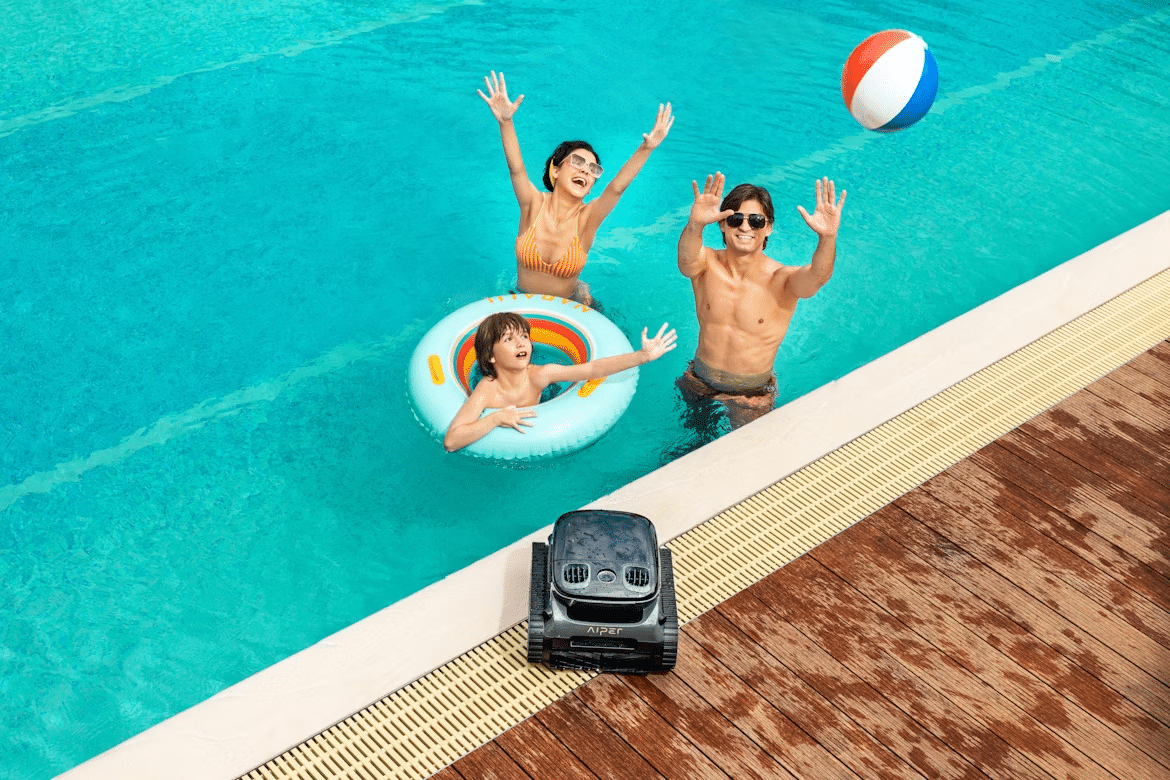
Corded vs. cordless
Corded robots run indefinitely on scheduled cycles without battery management, which makes them the practical choice for large pools that need daily automated cleaning.
The swivel cable technology on current models has largely solved the tangling problem that made older corded robots frustrating.
Cordless robots are cleaner to use and easier to store, but require a full charge between cycles. For pools needing daily cleaning, factor the charge time into whether the runtime covers your pool size in one session.
Floor-only vs. full coverage (walls and waterline)
Budget robots clean the floor. Full-coverage robots clean the floor, climb the walls, and scrub the waterline. If your pool has visible algae on the walls or a scum ring at the water’s surface, a floor-only robot will keep the bottom clean and leave the problem you actually notice untouched.
Verify that waterline scrubbing is explicitly listed as a feature; not all wall-climbing robots include it.
Filtration quality
Standard mesh filters capture leaves, bugs, and visible debris. Ultra-fine pleated cartridge filters capture fine sand, silt, and algae spores that pass through standard mesh and return to the water, keeping the pool cloudy despite regular robot cycles.
If your pool water runs cloudy rather than clear, ultra-fine filtration is the fix, not more frequent cleaning cycles.
Navigation technology
Random-navigation robots bounce off walls and move unpredictably, which leads to inconsistent coverage and repeated passes over clean areas while missing patches in corners.
AI path-mapped robots (Beatbot, Aiper X1 Pro Max, Polaris VRXIQ+) plan the route before starting and cover the pool surface systematically. For pools over 30 feet or irregular shapes, the difference in coverage completeness is significant.
Final Verdict: Which One Should You Buy?
For the most advanced residential pool cleaning available in 2026, the Beatbot AquaSense 2 leads the category on navigation intelligence, waterline scrubbing performance, and overall cleaning completeness.
For large in-ground pools with heavy debris loads from surrounding trees or sandy environments, the Aiper Scuba X1 Pro Max has the suction capacity and ultra-fine filtration to handle conditions that overwhelm lighter robots.
For pool owners who want daily automated cleaning without managing a charging schedule, the Polaris VRXIQ+ handles unlimited runtime and remote steering through a single app.
For anyone where the physical weight of pulling a robot from the pool is the deciding factor, the Gosvor LiteVac G1 offers 200 minutes of runtime at 15.2 lbs. More practical for daily retrieval than anything else on this list.
FAQs
Are robotic pool cleaners actually worth it?
For most pool owners, yes. Current robotic cleaners use significantly less energy than running the pool’s main pump system for manual vacuuming, and they eliminate several hours of manual labor per week during pool season. The upfront cost pays back in time and reduced chemical usage from consistently cleaner water over a single season.
How long do robot pool cleaners last?
Quality robotic pool cleaners typically run for 5 to 8 years with proper care. Rinse and dry the robot after each use, store it out of direct sunlight, and clean the filters regularly. Cordless models will likely need a battery replacement around the 4-year mark, which costs significantly less than replacing the unit.
Can robotic cleaners pick up algae and fine sand?
Only models with ultra-fine or pleated cartridge filtration. Standard mesh filters let fine particles pass straight back into the water. If algae or fine silt is the specific problem, confirm the model uses ultra-fine filtration before buying. It’s not universal across the category.
How often should I run my pool robot?
Two to three times per week keeps most residential pools consistently clean. Heavy foliage, frequent use, or pools in sandy or dusty climates benefit from daily cycles. Running the robot more frequently than necessary doesn’t improve cleanliness significantly once the pool reaches baseline cleanliness.
Do robotic pool cleaners climb walls?
Mid-range and premium models do, but not all of them. Entry-level and budget models often clean the floor only. Check that the product description specifically mentions wall climbing and waterline scrubbing. Those are distinct features that need to be listed explicitly, not assumed from the price point.